When you make a purchase through links on this site, I may earn a small portion as a commission through the Amazon Affiliate Program. These commissions help off set costs associated with blog production and do not affect your purchase.
The Problems
I don’t know what the weather is like where you’re at, but here in South Carolina it has been HOT! I’m talking mid 90’s every single day, with just about no rain in sight. In three weeks we’ve had one day of rain and one small thunderstorm roll through. Despite watering it multiple times a day, my poor garden has been looking so sad and droopy. Usually harvest would be well underway by now, but our spring garden took a little longer than expected, so my summer plants got planted later than usual. My little cucumber seedlings got scorched by the sun and have basically died off. We filled two brand new garden beds with what we thought was beautiful compost and topsoil. The expectation was an abundant harvest in those two beds. It turns out, the compost was way more potent than we realized, and both our tomatoes and green beans are fried! Seriously, we haven’t gotten a single green bean harvest and all the leaves are dying! The tomato leaves are curling, wilting and turning brown. Out of the tomatoes that have managed to develop, we’ve lost three quarters of them to blossom end rot. As if that wasn’t enough, my summer squash and zucchini got hit with squash vine borers, effecting over half of the plants in that bed. You can see photos of some of these fails down at the bottom of this post.
The Solutions
Now, I could let all these things get me down, and to be honest it definitely did for a little bit. However, I tried to take a step back and assess the situation and look for solutions.
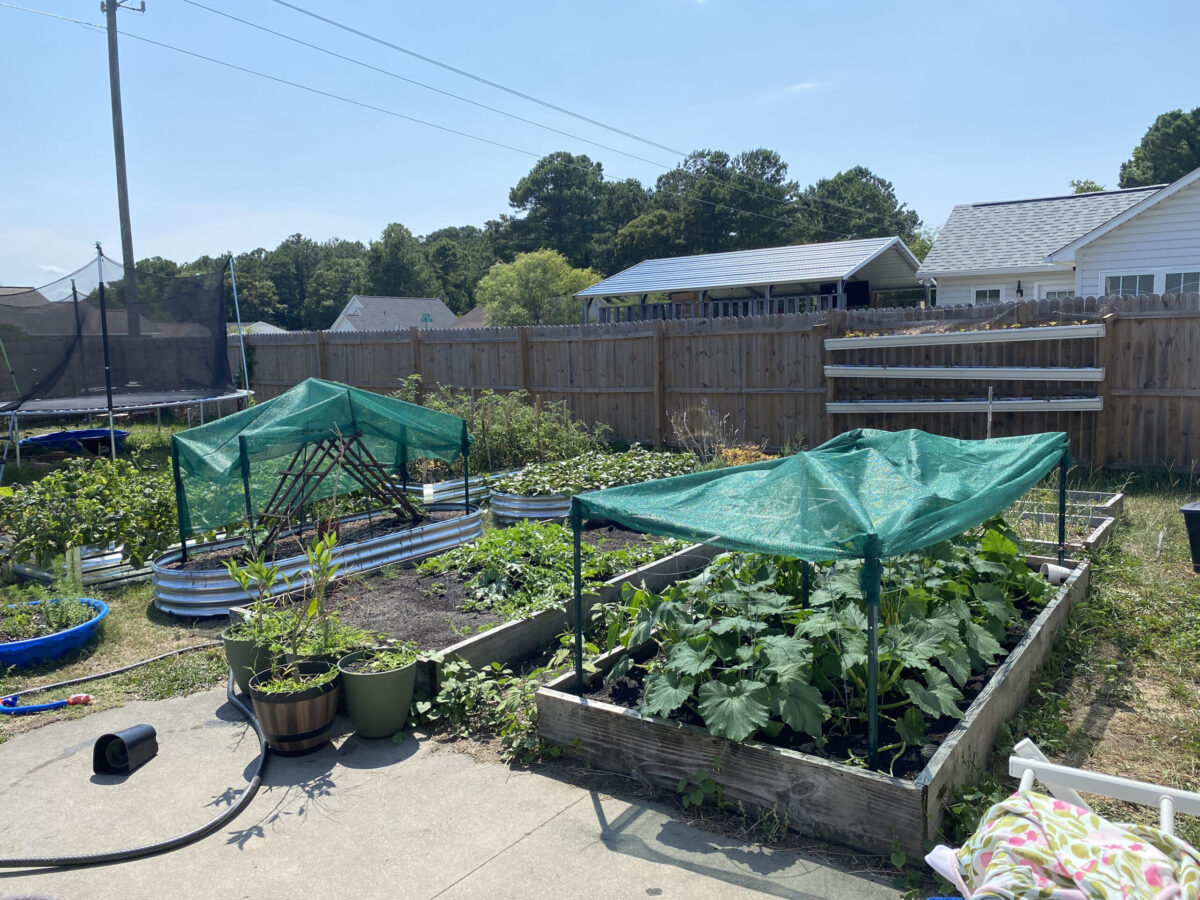
Problem 1: The Heat Frying the Plants. This solution was actually pretty easy. A few days ago, my husband helped me to put up some shade cloth over my zucchini and summer squash bed as well as my cucumber bed. Because the sun is so intense here, I decided to use 50% shade cloth. I also bought a couple of cucumber plants and replanted the cucumber bed. There is still so much time left in the season and hopefully this will actually put our cucumbers past the pesky pickle worm season. Maybe this “problem” was actually a blessing in disguise!
Problem 2: Too Much Nitrogen in Two of my Beds. There’s not really anything I can do to fix this situation other than just ride it out and know better for next time. For the second half of the summer we will probably pull all these plants and put in some nitrogen loving plants to help balance the soil out. In August I will re-plant green beans in a different bed. Last year we had a beautiful return on our fall green beans, so I’m not too worried about losing out on our summer crop.
Problem 3: Blossom End Rot. It’s too late to do anything about this one other than trying to salvage whatever tomatoes haven’t been affected. Next time I know to put some calcium in before planting my tomatoes. I’ll consider this one a lesson learned.
Problem 4: the Dreaded Vine Borers. In the past these guys have wiped out my entire crop before harvesting a single squash! Not this time though. I’ve learned that spending some time in the garden every day is crucial to the health of the plants. Part of my daily routine includes looking at each plant to make sure it is staying healthy. A few days ago some frass appeared on my squash vines and I immediately got to work hunting the culprits. A quick google search showed that I could extract the borers by cutting a small slit in the vine above the frass and pulling out the caterpillar. This technique worked on nearly all the effected plants. Now we wait and see if the plants can recover from the cuts I made in their stems, but so far they are looking good! I’ll continue to monitor these, and act quickly at any signs of new borers.
The Chickens
The chickens are doing okay in this heat, but I have noticed a slight decrease in egg production. Keeping them cool and comfortable is the name of the game here in the summertime. Even though their entire run is shaded, I still notice them panting and spreading their wings to cool down. A few times a day I am spraying the run with cool water which makes a nice little layer of mud and puddles for them to splash, scratch and drink from (if you have chickens then you know they will always choose muddy water over fresh water). This makes them so happy and I love watching them come running when I’m finished wetting down the run. I’ve also put one of our five-gallon water buckets in the run filled with Hydro Hen electrolyte water. They have constant access to water from our rain barrel system, but the extra electrolytes definitely help keep them hydrated. As the summer goes on, I’ll have to add a few more measures for them, but for right now these things are doing the trick.
Keeping Perspective
Just when I start to think I’m getting the hang of all this homesteading stuff, something new and different seems to inevitably pop up. I’m so blessed to have a partner who is able to keep me calm and level headed when faced with new challenges. I was devastated when I realized my mistake with the green beans, but my husband is the one who reminded me that we can grow them again later in the season, and all I’ve lost in the process is the $5 I spent on seeds. When put into that perspective, things don’t seem all that bad.


