This post contains Amazon Affiliate Links. When you make a purchase through links on this site, I may earn a small portion as a commission through the Amazon Affiliate Program. These commissions help offset costs associated with blog production and do not affect your purchase – thank you for your support.
Hello friends! As the weather starts warming up, I’m sure many of you are starting to make plans for the summer months ahead. It’s that time of the year when flowers are blooming, gardens are being planted, and for many families, it’s the end of the year crunch before school is out for the summer. Things look a little bit different over here, as we finished up our school year at the end of April. This isn’t some sort of boasting, it’s just how things worked out best for our family. You see with homeschooling comes flexibility, and we took advantage of that flexibility by beginning our school year in July instead of late August or September. This afforded us the opportunity to take days off as needed, including a two-week break around Christmas and time off when family and friends came to visit. Ending our year in April worked out so perfectly because heading into May is when garden and homestead tasks are in full swing. This way, we have plenty of time to focus on the garden, the chickens, the bees, and all the other day to day projects to be completed. I have been taking some time in the evenings to get things set on the paperwork side of homeschooling. I’ve been sorting through completed work to sort out work samples, reviewing yearly goals, typing up end of year reports, and organizing student portfolios. (If you are a homeschooling family, it’s important to note that your state may have certain guidelines that differ from South Carolina’s guidelines!) In this post I will address how I go about all this end of year stuff and give some photos with examples of what it looks like. This method has worked really well for us, and I hope you are able to take something from it that will help you out as well!
How to Start
The very first thing that I do when reviewing our homeschool year and getting end of year paperwork done is dig out the goals I made at the beginning of the year. These are academic and milestone goals that I create for each of my kids before beginning our school year. Next, I review that list and see how our year compared to the goals that we set. In reviewing, I assess if the concepts were mastered, understood, or introduced. These are terms that I created to help me analyze what areas we covered well, and what areas need either a little or a lot more work. It’s important to remember that this review isn’t a judgment of you or your teaching, so make sure to be honest with where your child is at, it can only benefit them in the future!
After reviewing beginning of the year goals, I then review any other academic milestones that have been met that may not have been on the original list. To do this, I look back at workbook work and review the lesson planner that I record completed work in. This part is pretty cool, because I frequently find things that I didn’t originally set out to teach this year but still were introduced or even sometimes mastered.
In a Word document, I simply type the progress of these goals up as bullet points under each subject that they pertain to. In my case, I only have goals for Math and ELA, so only these two subjects have bullet point summaries. It’s very satisfying to see a list of all the completed goals throughout the year. Below is an example of last year’s report. You can see the bullet points for math and ELA goals are the first two categories on the page.

Summarizing the Rest
For any other subjects, I write a short paragraph listing what topics were discussed. Because we use a lot of mini units from Peanut Butter Fish Lessons, I will list which mini unit topics we did throughout the year under a science heading followed by any science projects or experiments that were completed. For social studies and any other subjects, I use my planner to flip through and write a short summary of the year. If you use a curriculum for these it might be easier to do bullet points instead.
Sometimes, we do projects that address multiple subjects all at once (like the lemonade stand.) For these projects, I just bullet point a list of projects completed. I keep it really simple here. If for some reason there’s any questions about what the projects entailed, I have records in the planner that I can refer to, and usually also have photos that can be referenced as well. Remember, the end of year report is mostly for you anyways, so create it in a way that will benefit you the most for the upcoming year. In the last photo you can see the projects completed portion, and below you can see science and social studies paragraphs and everything else that I like to include on my reports. After printing this one out I realized that I should have added a list of what workbooks were completed and books that were read, so I added them in!

Adding in the Fun
Up next, I work on compiling a list of any clubs, seminars, extracurricular classes, and field trips from throughout the year. During my first year of homeschooling, this part was difficult because I didn’t do a great job of logging this information in one place. Instead, it was scattered throughout the planner on the days that the particular activity occurred resulting in hours of time flipping through page by page to find everything. This year, I knew I could do better in my record keeping and devoted a page at the front of my planner to recording field trips, and another page to classes and clubs. Rather than taking hours, I managed to get this list put together in just a few minutes. Organization really helped me out here. On my report, I simply type the name of the class, how long they participated in it, and any awards or special achievements they might have gotten.
Student Portfolios
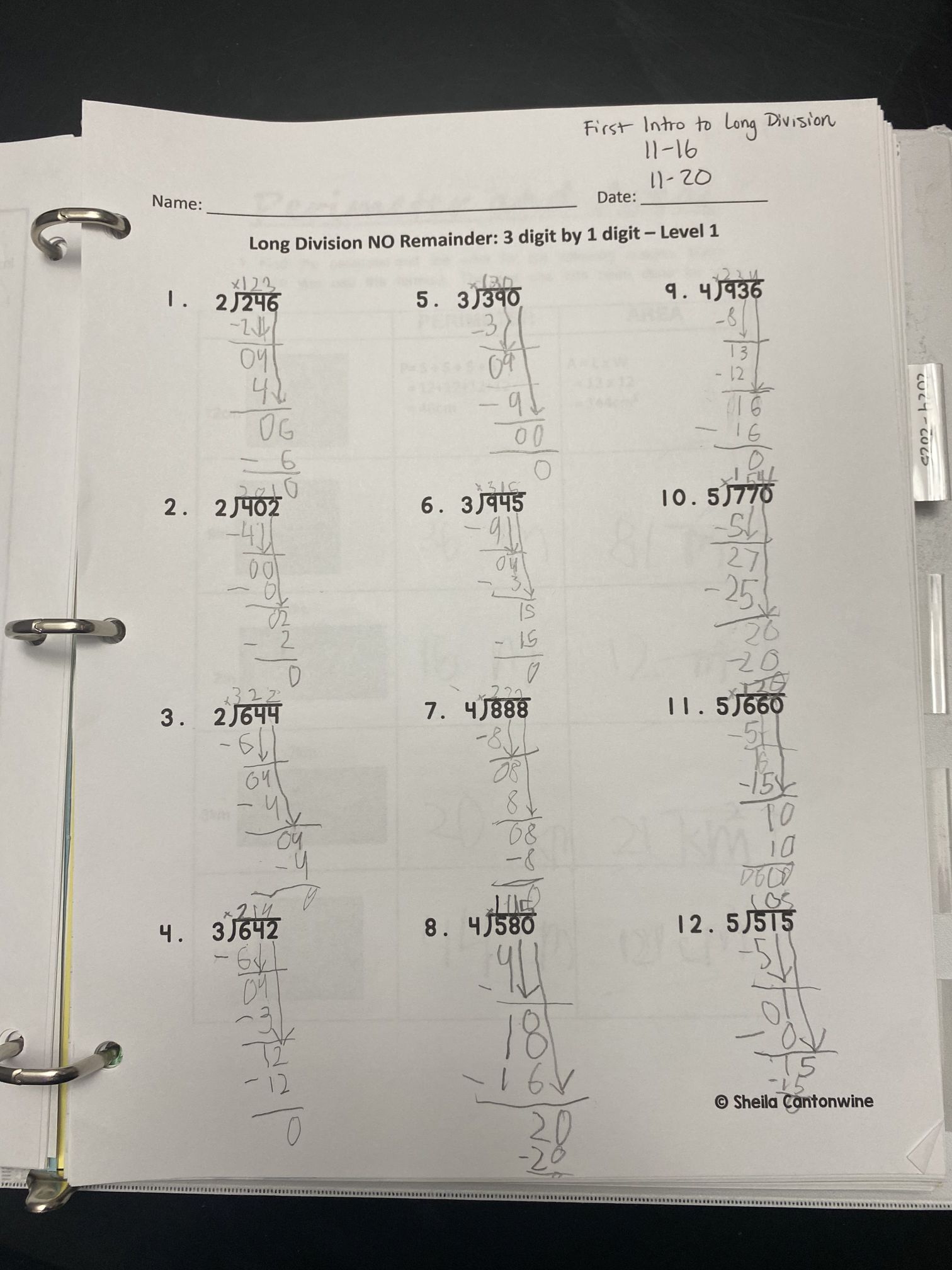
In SC, one of our homeschool laws is that we are required to keep a student portfolio with work samples from throughout the year. This doesn’t mean you have to keep every single worksheet, it just means to pick a few from the beginning, middle, and end of the year to show what the student has been working on. During the year, I throw all completed worksheets in a folder and don’t touch them until the end of the year. At the end of the year, I work on sorting through it all. I try to pick work samples that show a variety of different types of work and also show student growth throughout the year and get rid of the rest. Below is a sample of the math work I saved from last year’s portfolio. Remember, you don’t have to choose only work that is 100% correct, try and show authentic work not just the highlight reel so that it is an accurate representation of the year.

After finishing end of year reports, I work on assembling student portfolios. I keep a three-ring binder for each student which lists their name and the school year and what grade level they are in on the front. I’m using the same binder from last year with a divider for my son this year since there’s still plenty of space. The first thing I put in the binder is the Mid Year report I typed up around January followed by the end of year report I just finished up. After that, I put any certificates or awards that the student got throughout the year. Most of these are from completing workbooks, but they have also received certificates for summer reading programs, PE classes, and swim lessons. Following the certificates are the work samples. I sort these out by subject and just write the subject on a piece of paper in between work samples. That’s it! The reports and portfolios are completed for the year and can now be put away until next year. I like to use a plastic hanging file folder box to store completed workbooks and my student portfolios in. Legally, I have to keep these records for two years, so having a box this size gives plenty of space to keep whatever I need to and it’s so easy to just tuck the boxes under my bed!

Wrapping it Up
My hope is that this post has helped at least one family in their homeschooling journey. Of course, there are so many ways to keep records and what works for us might not work for others. I hope the remainder of your homeschool year is filled with fun and smooth sailing! In my next post I’m going to check in with our garden and show you what we’ve harvested so far and what’s growing now!